

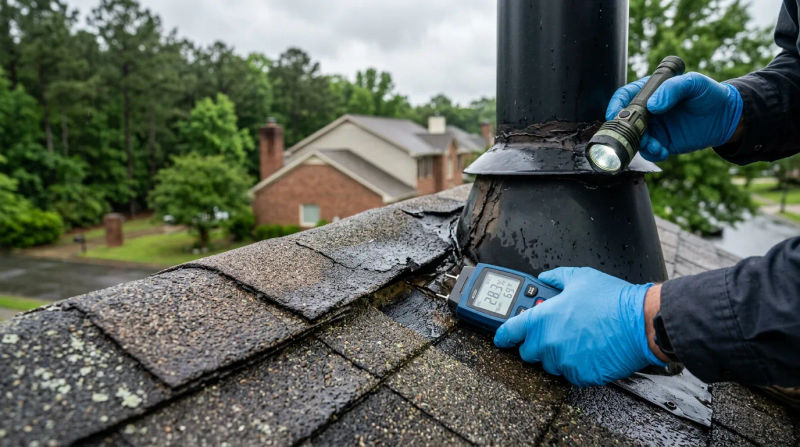
It’s a familiar story here in Northport. A strong May thunderstorm rolls through, the kind that rattles the windows and sends sheets of rain sideways. The storm passes, the sun comes out, and everything seems fine. Then, a day or two later, you notice it: a faint, brownish circle on the ceiling in the corner of a bedroom, or a musty smell in a closet. You didn’t have a leak before, so where did this water come from? The answer is often wind-driven rain, a common culprit that exposes hidden weaknesses in your roof just as we head into hurricane season.
After more than 15 years inspecting roofs in our area, I’ve seen countless times how high winds can force water into places it would never normally go. It can push water uphill, sideways, and underneath the very materials designed to keep it out. Understanding where your roof is most vulnerable is the first step in preventing a small watermark from turning into a major interior repair job during a Gulf storm.
Common Signs and Symptoms
Identifying a leak from a wind-driven rain roof event can be tricky because the evidence might not appear directly below the entry point. Water can travel along rafters and insulation before it finally shows up on your ceiling. Here are some of the most common signs our technicians look for, especially after a severe storm.
- New or Expanding Ceiling Stains: This is the most obvious sign. Look for small, yellowish, or brown circles on your drywall. Pay close attention to corners, areas around light fixtures, and ceiling fans.
- Peeling Paint Near the Ceiling: Moisture getting into the drywall will cause the layers of paint to bubble and peel away from the wall, often right where the wall meets the ceiling.
- Dampness or Stains in the Attic: If it's safe to do so, a quick look in your attic after a storm is invaluable. Look for wind-driven rain attic stains on the underside of the roof decking, wet or compressed insulation, and damp spots on the wood framing. A musty, mildew-like odor is also a strong indicator of moisture.
- Visible Drips: During a heavy, windy storm, you might see active dripping. Don't ignore it, even if it stops when the rain lets up. It's a clear warning of a vulnerability.
Beyond these general signs, specific parts of your roof have their own tell-tale symptoms:
- Valley Leak Symptoms After Heavy Rain: Valleys are the 'V' shaped channels where two roof planes meet. They handle a massive volume of water. After a storm, you might see a long, linear water stain on the ceiling that runs parallel to the valley line on the roof above. In the attic, you'd see dampness all along the rafter where the two roof planes join.
- Ridge Cap Leak Signs During Storms: The ridge cap is the peak of your roof. If it's compromised, wind can lift the cap and drive rain directly into the attic. Signs include water stains appearing on the ceiling directly below the roof's highest point or visible light and moisture along the ridge beam inside your attic.
- Wall Stains Where a Roofline Meets a Wall: Look for water stains on an exterior-facing wall, especially on the second story. This often indicates failed flashing where the shingles meet a vertical surface, like a dormer or chimney.
What Causes This Problem
Understanding the cause helps you appreciate why a professional inspection is so crucial. A roof isn't just a single sheet of material; it's a complex system of overlapping components. Wind-driven rain exploits the tiny gaps and weaknesses in this system.
- Compromised Shingles: High winds can lift the edges of asphalt shingles, breaking the sealant strip that bonds them together. Once that seal is broken, rain can be blown underneath the shingle and onto the underlayment. Over time, this constant exposure causes the underlayment to degrade, allowing water to reach the roof deck.
- Failed Flashing: Flashing is the thin metal material installed around chimneys, vents, skylights, and in roof valleys. Its job is to direct water away from these seams. Over time, flashing can rust, come loose, or the sealant around it can dry out and crack. This creates a direct entry point for wind-blown water.
- Cracked Pipe Boots: Every roof has plumbing vents that stick out. These are sealed with a rubber or neoprene boot. Here in Northport's hot-humid climate, the intense sun can cause this rubber to become brittle and crack within just a few years, creating an easy opening for rain.
- Improperly Nailed Ridge Vents: The ridge cap and vent are critical for attic ventilation but are also prime targets for wind. If the ridge cap nails have worked themselves loose or were installed incorrectly, wind can easily lift the entire cap and force rain into the attic. This is one of the most common ridge cap leak signs during storms that we encounter.
Many homes in neighborhoods like Adamsville were built in the 1950s. These classic Ranch-style homes often have simple gabled or hipped roofs, which are generally durable. However, after 60-70 years, the original flashing, underlayment, and decking may be well past their service life. Even if the roof has been replaced, a key point of failure we often see is new shingles installed over aging, inadequate flashing. The low-profile nature of these roofs can also make them susceptible to wind uplift along the eaves if the starter strip of shingles wasn't installed correctly.
When to Call a Professional
Some home maintenance is suitable for a DIY approach, but diagnosing and repairing a wind-driven rain roof issue is not one of them. Getting on a roof, especially a wet one, is extremely dangerous without the proper safety training and equipment. Furthermore, pinpointing the exact source of a leak requires a trained eye.
You should call an experienced professional if:
- You see any of the signs mentioned above, no matter how small.
- Your roof is over 15 years old and you want a pre-hurricane season assessment.
- You know your neighbors are getting their roofs replaced, as homes in a neighborhood are often the same age and experience similar wear and tear.
When our technicians perform an inspection, we follow a standardized process to ensure nothing is missed. It starts with a comprehensive interior check to map out any stains or signs of moisture. Then, we conduct a thorough attic inspection to trace the water trails back to the point of entry. Finally, we get on the roof for a hands-on evaluation of the shingles, flashing, sealants, and all penetration points. This systematic approach allows us to find the root cause, not just the symptom, and recommend a reliable, long-term repair.
Conclusion
With the Northport storm season upon us, being proactive is your best defense against water damage. Those small, mysterious stains that appear after a bout of wind-driven rain are your roof's way of warning you about a hidden vulnerability. Problems like valley leak symptoms after heavy rain or loose ridge caps won't fix themselves; they will only get worse with each successive storm.
By taking these signs seriously and understanding the potential causes, you can take action before a minor issue becomes a major catastrophe during a tropical system. A thorough inspection now provides peace of mind and protects the investment you've made in your home.
If you notice any of these signs, contact a local roofing professional for a comprehensive inspection.