

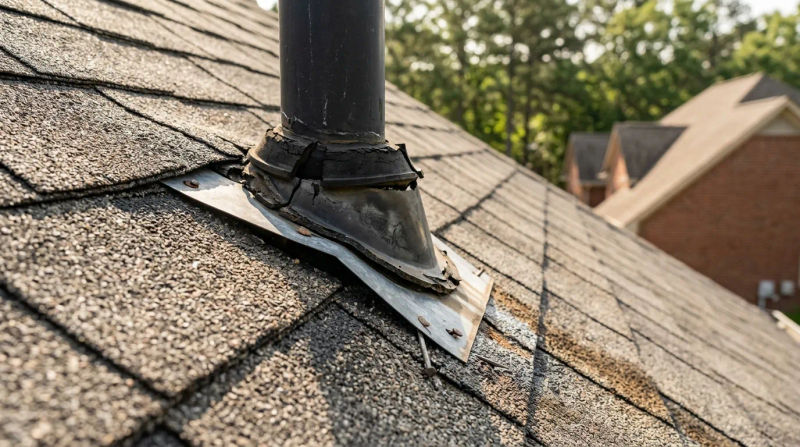
It often starts small. You might notice a faint, brownish circle on the ceiling of your upstairs bathroom or laundry room. It’s easy to ignore at first, maybe you even paint over it, hoping it was a one-time issue. But after the next heavy rain, it’s back, a little larger this time. As a Senior Roofing Project Supervisor with over fifteen years of experience on rooftops here in Northport, I can tell you that this is one of the most common calls we get. More often than not, that mysterious leak traces back to a small, unassuming component on your roof: a failing pipe boot.
Your roof isn't a single, monolithic surface. It has necessary penetrations for plumbing vents, exhaust fans, and attic ventilation. Each one of these openings is a potential entry point for water. The roof pipe boot is the specialized flashing designed to seal the area around these pipes, keeping your home dry. With hurricane season on the horizon, May is the perfect time to assess the health of these critical components before heavy rains and high winds can turn a small vulnerability into a major problem.
Common Signs and Symptoms
Identifying a failing pipe boot early is key to preventing extensive and costly water damage. Our technicians are trained to spot these issues during routine inspections, but many signs are visible to an observant homeowner. We typically categorize them into interior and exterior indicators.
Interior Vent Boot Leak Signs: The first evidence of a problem often appears inside your home. Because these vents service plumbing fixtures, you'll most likely see these signs in rooms below them, like bathrooms, kitchens, and utility rooms.
- Ceiling Stains: A small, isolated, and often circular water stain is the classic sign. It may appear damp or discolored after a storm.
- Peeling or Bubbling Paint: Moisture seeping through the drywall will cause the paint to lose adhesion, resulting in bubbling, flaking, or peeling.
- Attic Inspection: If you can safely access your attic, look for signs of trouble directly above the affected rooms. You might see water streaks on the underside of the roof decking, damp or compressed insulation, or even a musty smell that indicates persistent moisture.
Exterior Signs from the Ground: You don't always need to get on the roof to spot a problem. A good pair of binoculars and a careful walk around your property can reveal a lot, especially on the low-to-moderate pitched roofs common on the 1970s-era Ranch and Split-Level homes found throughout many Northport neighborhoods.
- Cracked or Brittle Appearance: The most common point of failure is the flexible rubber or neoprene collar that seals directly against the pipe. Look for a rubber pipe boot cracked from sun exposure. It may look dried out, discolored, or have visible splits.
- Gaps and Tears: Check the seal where the rubber collar meets the PVC pipe. Any visible gap is a direct path for water. The collar can also tear away from the metal or plastic base flashing.
- Lifted or Damaged Base: The flat base of the boot, which integrates with the shingles, should lie perfectly flat. If the corners are lifted or the nails have pulled loose, wind-driven rain can easily get underneath it.
What Causes This Problem
A roof pipe boot doesn't last forever. Several factors, particularly in our local climate, contribute to its eventual failure. Understanding these causes helps explain why regular inspection is so important.
- UV Degradation: This is the primary culprit in Northport, AL. The intense, year-round sun beats down on your roof, and its ultraviolet rays break down the polymers in the rubber and plastic components of the boot. This process makes the material brittle, weak, and prone to cracking. It’s the main reason we see a rubber pipe boot cracked long before the surrounding shingles are worn out.
- Heat and Thermal Cycling: The extreme heat on a roof surface causes materials to expand. As temperatures cool, they contract. This constant cycle, day after day, season after season, puts stress on the seal between the rigid PVC pipe and the flexible boot, eventually weakening it.
- Storms and Wind-Driven Rain: The frequent, gusty thunderstorms we experience in the spring and summer can be brutal on roof penetrations. High winds can lift the edges of the flashing, and torrential rain forces water into any tiny crack or gap that has formed. This is especially true for the Northport AL roof vents that face the prevailing direction of storms.
- Improper Installation: Sometimes the problem dates back to the initial installation. If the boot was nailed in the wrong place, not properly integrated with the surrounding shingles, or if the wrong type of sealant was used (or none at all), it creates a built-in failure point that will eventually leak.
- Age: Simply put, pipe boots have a limited lifespan, typically 8-12 years, depending on the material quality and exposure. On many homes built in the 1970s, these components may have already been replaced once and could be nearing the end of their second service life.
When to Call a Professional
Once you’ve identified a potential issue, the next question is whether to address it yourself or call for help. While some homeowners are skilled enough for DIY projects, roof work carries significant risks.
Attempting a DIY repair on a pipe boot is more complex than it appears. It involves more than just applying sealant. A proper replacement requires removing shingles around the pipe without damaging them, prying up the old, failed boot, correctly installing a new one with the proper nailing pattern, and integrating it back into the shingle courses to shed water correctly. One misstep can trap water instead of repelling it, making the original leak worse.
We recommend calling an experienced professional if you encounter any of the following:
- Safety Concerns: If you are not 100% comfortable and properly equipped to work safely on a ladder and a sloped roof, do not attempt the repair. Our crews are trained in fall protection and use standardized safety protocols on every job.
- You See Interior Damage: The moment you see a water stain inside, the situation has already progressed. A professional needs to assess the extent of the leak, check for moisture in the roof deck and insulation, and ensure the problem is fully resolved, not just patched.
- Uncertainty of the Cause: Is it really the pipe boot? Or is it a nearby nail pop, a damaged shingle, or a problem with another flashing? A qualified technician can perform a comprehensive diagnosis to ensure the true source of the leak is found and fixed correctly the first time.
- To Ensure a Durable Repair: An experienced roofing professional will use high-quality materials designed to withstand the Alabama climate and will guarantee the repair is integrated seamlessly into your existing roofing system. This provides peace of mind that the problem is solved for the long term.
Conclusion
Your roof's pipe boots are small but mighty defenders of your home's integrity. They face a constant battle against sun, heat, and storms. Proactive inspection is your best strategy for catching failures early. Take a few minutes this month to look for the tell-tale signs of a problem: interior water stains, musty attic smells, or cracked and deteriorating rubber collars on your roof.
Addressing a failing roof pipe boot is typically a quick and affordable repair. Waiting until it becomes an active, damaging leak during a hurricane is a far more stressful and expensive scenario. Don't let a small component cause a big headache.
If you notice any of these signs, contact a local roofing professional for an inspection. They can help you ensure your roof is sealed, secure, and ready for whatever the season throws at it.