

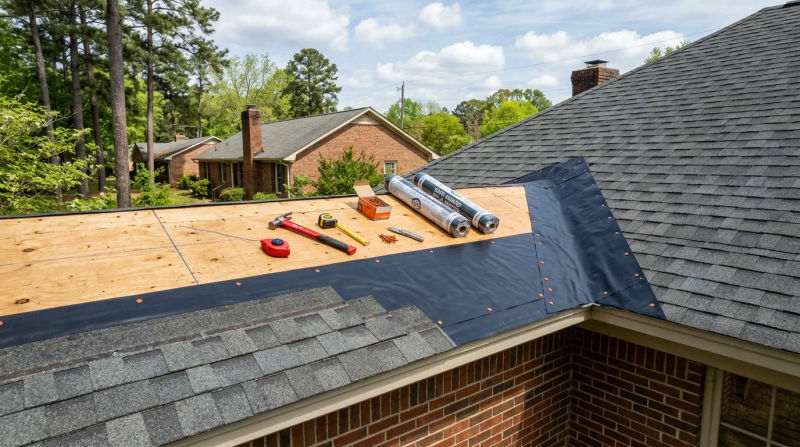
As a Senior Roofing Project Supervisor here in Northport, the first question I almost always hear from homeowners is, “What’s it going to cost?” It’s a completely fair question. A new roof is a significant investment, and you deserve to know where your money is going. When we start discussing upgrades like a secondary water barrier, the cost conversation becomes even more important.
My goal with this guide is to give you a transparent, no-nonsense look at what you can expect to budget for this critical upgrade. With over 15 years of experience on rooftops across the Tuscaloosa area, I’ve seen firsthand how a properly sealed roof deck can be the difference between a dry home and a disaster, especially when hurricane-season rain bands arrive. As we head into May, now is the perfect time to plan for these defenses.
Average Costs in Northport
First, let's clarify what a secondary water barrier is. It’s not the old-school black felt paper you might be picturing. It’s a modern, high-performance system designed to make your roof deck waterproof even if shingles are damaged or blown off in a storm. Think of it as a gasket for your entire roof. In our hot, humid Northport climate, this is one of the most valuable upgrades you can make.
There are two main types of systems we install:
- Peel-and-Stick (Self-Adhered) Membrane: This is the gold standard. It’s a thick, rubberized asphalt membrane that sticks directly to the wood decking of your roof. It seals around every nail and staple used to attach your shingles, creating a truly waterproof barrier. It provides the ultimate protection against wind-driven rain.
- Tape-Seamed Synthetic Underlayment: This is a more budget-friendly but still highly effective option. We use a durable, high-tech synthetic underlayment and then seal all the seams between the panels with a special roofing tape. This prevents water that gets under the shingles from finding its way through the joints in your roof deck.
So, what does this cost? Here are some realistic price ranges for the Northport area, presented as an add-on cost to a full roof replacement:
- Tape-Seamed Synthetic System: Expect to add $0.75 to $1.50 per square foot to your total project cost. For a typical 2,000-square-foot 1950s Ranch home common in our area, this would be an additional $1,500 to $3,000.
- Full Peel-and-Stick Membrane System: The peel and stick underlayment price Northport is higher due to material and labor intensity. Budget for an additional $1.50 to $3.00 per square foot. On that same 2,000-square-foot home, the upgrade would range from $3,000 to $6,000.
These are ballpark figures, of course. The final price depends on several specific factors related to your home.
Factors That Affect Price
No two roofing jobs are exactly alike. When our technicians build an estimate, we’re looking at several variables that influence the final sealed roof deck upgrade cost Alabama.
- Material Choice: As shown above, a full peel-and-stick system costs roughly double a tape-seamed synthetic system. The material itself is more expensive, and it requires more meticulous labor to install correctly.
- Condition of the Roof Deck: This is a huge factor, especially in homes built in the 1950s. Before we can apply any new underlayment, the wood decking underneath must be solid, clean, and dry. If we remove the old shingles and find soft spots, rot, or delaminated plywood, those sheets must be replaced. Deck replacement is an additional cost, typically priced per sheet of plywood.
- Roof Complexity and Pitch: A simple, low-pitched gable roof on a Ranch-style home is more straightforward to work on than a steep, multi-faceted roof with dormers, valleys, and skylights. Every valley, wall flashing, and pipe penetration requires extra time and material to cut, fit, and seal properly to ensure the secondary water barrier is seamless.
- Scope of the Project: Are we sealing the entire roof deck or just the most vulnerable areas? While a full seal is recommended for maximum protection, some homeowners on a tighter budget may opt to apply peel-and-stick membrane only in valleys and around eaves, which are high-risk areas for water intrusion.
How to Get the Best Value
Getting the best value isn’t just about finding the lowest price; it's about making a smart, long-term investment in your home's protection. A secondary water barrier for hurricane rain is an investment, not just an expense.
- Install it During a Re-Roof: The most cost-effective time to upgrade your underlayment is when you are already replacing your roof. The tear-off and installation labor is already part of the project, so adding the sealed deck system is an incremental cost. Trying to do this as a standalone project is not feasible.
- Consider the Long-Term Savings: A few thousand dollars for a sealed deck might seem like a lot upfront. But compare that to the cost of repairing drywall, replacing insulation, and remediating mold after a single water leak during a major storm. The upgrade often pays for itself by preventing just one major incident.
- Ask About Insurance Discounts: Many insurance carriers offer significant discounts on homeowner's insurance premiums for homes with a documented, properly installed secondary water barrier. It shows you've taken proactive steps to mitigate storm damage. Ask your contractor for the documentation you'll need to submit to your insurance agent.
- Choose the Right System for You: You don't always need the most expensive option. For many homes, a professionally installed tape-seamed synthetic system offers a massive leap in protection over standard felt paper and provides excellent value.
Questions to Ask Your Contractor
When you're getting quotes, you need to be able to compare apples to apples. Here are the key questions I recommend asking any contractor to ensure you’re getting a quality installation.
- What specific product will you be using? Ask for the brand and product name so you can research it yourself.
- How does your team handle penetrations? The seal around vents, pipes, and chimneys is the most critical part. What are their standard procedures?
- What is your process for dealing with bad decking? How will you identify it, what will it cost to replace, and how will that be communicated to me?
- Is your crew certified or specifically trained to install these systems? Peel-and-stick membranes, in particular, require specific techniques for a successful installation.
- What warranties cover the secondary water barrier? Is there a manufacturer’s warranty on the material and a separate workmanship warranty from the installer?
Choosing a reliable contractor with organized workflows and trained crews is just as important as choosing the right material. The best barrier in the world will fail if it's not installed correctly.
A secondary water barrier is one of the most effective upgrades you can make to fortify your Northport home against our intense weather. While the secondary water barrier cost adds to a roof replacement project, its value in protecting your home's structure and your peace of mind is immeasurable.
For a personalized estimate in Northport, contact McDonald demolition for a free consultation. We can walk you through the options and find the right solution for your home and budget.