
It’s a scene that’s become all too familiar across Southern California in late summer and early fall: you wake up to a hazy sky and find a fine layer of gray dust coating your car, your patio furniture, and your entire property. While your first instinct might be to wash it off your windows and walkways, many homeowners overlook the most critical surface collecting this debris: their roof. As someone who has spent over 15 years on rooftops, I can tell you that this isn't just dust. Wildfire ash is a complex, corrosive substance that can cause significant problems, especially with the first rains of the season just around the corner.
In areas like Beverly Hills, where ash can drift for miles, this seasonal coating is a serious concern. Understanding the risks and knowing what to look for can be the difference between a simple cleaning and a costly, complex repair down the line.
Common Signs and Symptoms
At first glance, the problem might seem purely cosmetic. However, the signs of potential roof ash damage go beyond a simple dusty appearance. Our inspection teams are trained to spot subtle indicators that homeowners might miss. Here’s what you should look for from the ground:
- A Visible Layer of Ash: The most obvious sign is a uniform or patchy gray or white layer of ash on roof shingles Beverly Hills properties often see. The thickness can vary, but any accumulation is cause for concern.
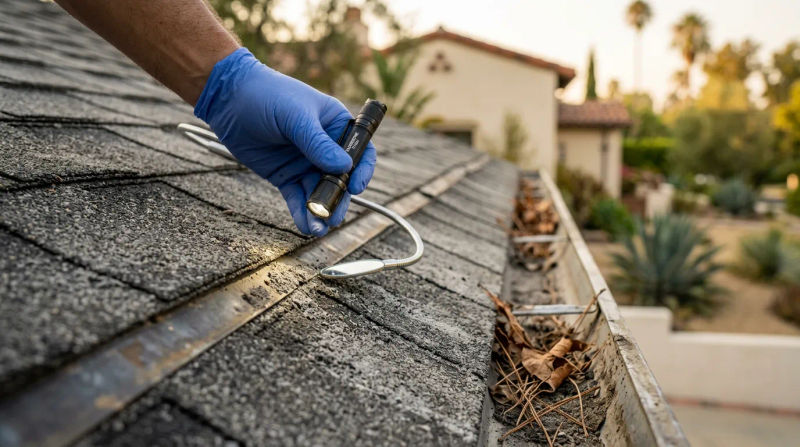
- Clogged Gutters and Downspouts: Ash is lightweight and easily washes into your drainage system with the slightest moisture, like morning dew. Look for gutters that are full of gray sludge. One of the clearest ash clogged roof drains signs is when you see water overflowing the sides of your gutters during the first rain, or if downspouts are not draining properly.
- Staining on Fascia or Siding: If your gutters are already clogged, you may see dark streaks or water stains running down the fascia boards behind them or even on the siding of your home. This indicates water is backing up and spilling over.
- Discoloration of Roofing Material: On lighter-colored roofs, you might notice dark, grimy streaks where moisture has already begun to mix with the ash, creating a corrosive slurry that can stain the surface.
- Reduced Water Flow from Scuppers: For homes with flat or low-slope roofs, check the scuppers (the drainage openings along the edges of the roof). If you see debris and little to no water flow after a light rain, it’s a strong sign of an internal clog.
What Causes This Problem
It’s crucial to understand that wildfire ash is not inert like common dust. It is the particulate byproduct of burned organic materials, and it contains chemical compounds that become corrosive when wet. The problem unfolds in a few key stages.
First, the ash settles across the vast surface area of your roof. On its own, when dry, it's relatively harmless, though it can be abrasive if agitated. The real trouble begins when moisture is introduced. Even the small amount of moisture from coastal fog or morning dew is enough to start the chemical reaction, creating an alkaline or acidic solution. This solution acts as a chemical accelerant, slowly eating away at roofing materials.
For asphalt shingles, this corrosive slurry begins to break down the protective mineral granules that shield the asphalt from UV rays and weather. Over time, this premature aging leads to brittleness, cracking, and eventual leaks. The abrasive nature of the ash also means that as it’s washed down the roof by rain, it acts like sandpaper, physically scouring away these same protective granules, especially in high-flow areas like roof valleys.
For other roof types common in the Beverly Hills area, the risks are different but just as severe:
- Tile Roofs (Clay or Concrete): Ash accumulates in the curved channels (pans) of the tiles and in the valleys. This buildup can create dams, forcing water to move sideways and potentially get underneath the tiles, compromising the underlayment - the roof's primary water barrier.
- Flat Roofs: These are highly vulnerable. Ash and debris quickly find their way to the internal drains. A small amount can form a thick sludge that creates a complete blockage. When this happens, water has nowhere to go. It pools on the roof, a condition known as “ponding,” which adds immense weight and can rapidly degrade roofing membranes, leading to catastrophic leaks.
Ultimately, the combination of chemical corrosion, physical abrasion, and drainage obstruction is what makes roof ash damage a significant threat to your home’s integrity.
When to Call a Professional
After a wildfire event, many homeowners wonder, how to clean ash off a roof safely? While the impulse to grab a ladder and a leaf blower is understandable, this is a task where professional expertise is highly recommended for both safety and effectiveness.
Working on any roof is inherently dangerous. A layer of fine ash can make surfaces, especially steeper ones, incredibly slippery. Our technicians use specialized safety equipment, including harnesses and respirators, to mitigate these risks. The ash itself can also be harmful if inhaled.
There are certain situations where calling an experienced professional is not just recommended, but essential:
- If your roof has a steep pitch.
- If your home is two or more stories high.
- If you see any of the signs of clogged drains or gutters. Simply blowing the ash off the shingles will not solve a blockage deep inside your downspout.
- If the ash layer is thick or has been sitting for a while. Compacted or wet ash is much harder to remove and requires specific techniques.
- If your roof is made of a delicate material like clay tile or slate, which can be easily broken if walked on improperly.
Our trained crews have standardized processes for this exact scenario. We don't just blast the roof with a pressure washer, which can cause more harm than good by stripping granules and forcing water under shingles. Instead, we typically use a combination of air blowers, soft-bristle brooms, and controlled, low-pressure rinsing to gently and effectively lift the ash. We also ensure that all drainage systems - gutters, downspouts, scuppers, and internal drains - are thoroughly cleared and flushed to ensure they are ready for the upcoming rainy season.
Conclusion
That layer of gray dust on your roof is more than an eyesore; it's a potential threat waiting for the first rain to activate it. The corrosive and abrasive nature of wildfire ash can shorten your roof's lifespan and lead to clogs that cause water damage inside your home. Taking action in the dry period between the end of fire season and the start of the winter rains is the most effective way to protect your investment.
Don't wait for a small problem to become a big, expensive one. A thorough inspection and professional cleaning can provide peace of mind and ensure your roof is prepared to handle whatever the changing seasons bring.
If you notice any of these signs, contact a local Roofing professional for an inspection.