

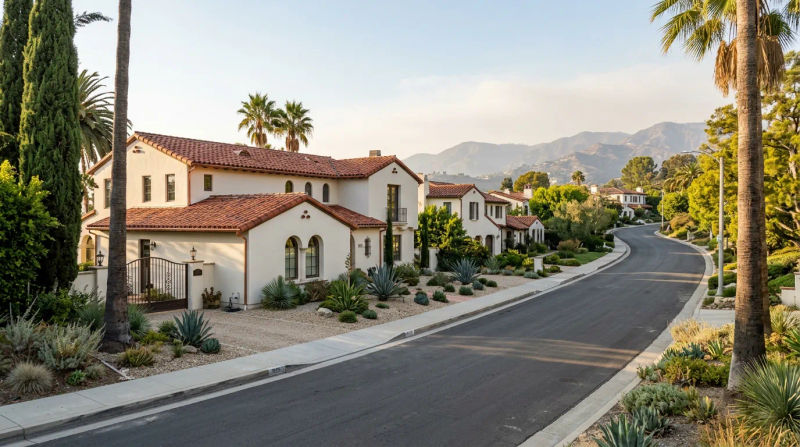
As a Senior Roofing Project Supervisor with over 15 years of experience in Southern California, I’ve spent a lot of time on rooftops across the region. My name is Evan McAllister, and my work with McDonald demolition focuses on protecting homes from the elements. Here in Beverly Hills, one of the most pressing concerns we face isn’t just rain or sun - it’s the increasing threat of wildfire. With August upon us and fire season in full swing, it’s crucial to understand that protecting your home isn’t about luck; it’s about preparation. Beverly Hills has unique architectural styles and is situated near a significant natural landscape, creating specific vulnerabilities that demand local expertise to address properly.
This guide is for homeowners who want to move beyond basic fire safety and implement serious wildfire roof hardening measures. We'll cover the specific challenges our community faces, the most effective upgrades for local homes, and how to choose a contractor who understands the stakes.
Beverly Hills Weather Challenges
Living in Beverly Hills offers incredible scenery, with the beautiful Santa Monica Mountains fire roofing risks being a constant backdrop. However, this proximity is also our greatest vulnerability. During late summer and fall, powerful Santa Ana winds can sweep down from the mountains, creating perfect conditions for wildfires to spread rapidly. But it's not the wall of flames miles away that typically ignites homes; it's the blizzard of embers that precedes it.
Wind-driven embers can travel a mile or more ahead of the main fire, showering neighborhoods with thousands of tiny, glowing firebrands. These embers are the primary cause of home ignition during a wildfire. They get caught in flammable materials and find their way into the smallest openings in a home's exterior. Your roof is the single largest, most exposed surface of your home, making it the first and most critical line of defense.
At McDonald demolition, we see this often in Beverly Hills homes. Common vulnerabilities include:
- Complex Rooflines: Many beautiful homes feature multiple gables, valleys, and dormers. While architecturally stunning, these create areas where leaves, pine needles, and other debris can accumulate, providing perfect fuel for embers.
- Open Eaves: Older homes, in particular, may have open-eave construction, which acts as a direct entry point for embers to reach the attic and structural supports.
- Tile Roof Gaps: Spanish and Mediterranean-style tile roofs are iconic, but the open ends of barrel tiles can catch embers like a catcher's mitt. Without proper fire-stopping materials, embers can ignite the underlying roof deck.
Understanding that embers are the primary threat is the first step toward effective protection. The goal of roof hardening is to create a non-combustible and impenetrable shield against this airborne attack.
Best Practices for Local Homeowners
Effective wildfire roof hardening involves a systematic approach to eliminating vulnerabilities. It’s not just about the roofing material itself, but about the entire roofing system and its connection to the rest of the home. Our technicians are trained to assess these systems holistically.
Here are the top priorities for Beverly Hills homeowners:
1. Install a Class A Fire-Rated Roof This is non-negotiable for Beverly Hills CA ember resistant roofing. A Class A rating means the roofing material can withstand severe fire exposure. Fortunately, many attractive options meet this standard:
- Asphalt Shingles: Many modern architectural shingles carry a Class A rating.
- Concrete and Clay Tiles: Inherently non-combustible, but their installation is critical.
- Metal Roofing: Standing seam or stone-coated steel offers excellent fire resistance.
2. Fortify Roof Edges and Vents Embers are relentless at finding gaps. A hardened roof system seals these entry points.
- Drip Edges: Install metal drip edges at all roof edges. This prevents embers from getting underneath the roof sheathing.
- Vents: All attic, soffit, and foundation vents must be covered with 1/8-inch metal mesh to block embers while maintaining airflow. Do not use plastic vents.
- Seal Tile Roof Gaps: For tile roofs, we install