

As a Senior Roofing Project Supervisor with over 15 years of experience on rooftops here in the Northport area, I’ve seen what our intense summer weather can do. You’re sitting on your porch, watching those dark afternoon clouds roll in, and you feel that first drop of rain. It’s a familiar summer ritual. But for a homeowner, it can also bring a sense of anxiety. Is my roof ready for this? That nagging question often leads back to one of the most critical, yet frequently overlooked, parts of your roofing system: the flashing.
Flashing is the thin metal material - typically aluminum or galvanized steel - that directs water away from the most vulnerable areas of your roof. You'll find it around chimneys, skylights, vents, and where different roof planes meet. When it's working correctly, you never think about it. When it fails, it becomes a direct path for water to enter your home, leading to some of the most common Northport summer storm roof leaks. Catching the problem early is key, especially as we head into storm season.
Common Signs and Symptoms
From my years inspecting homes, I can tell you that a roof rarely fails all at once. It gives you warnings. The trick is knowing what to look for. Homeowners can often spot the initial loose roof flashing signs from the safety of the ground, sometimes with the help of binoculars. Here’s what our technicians are trained to identify:
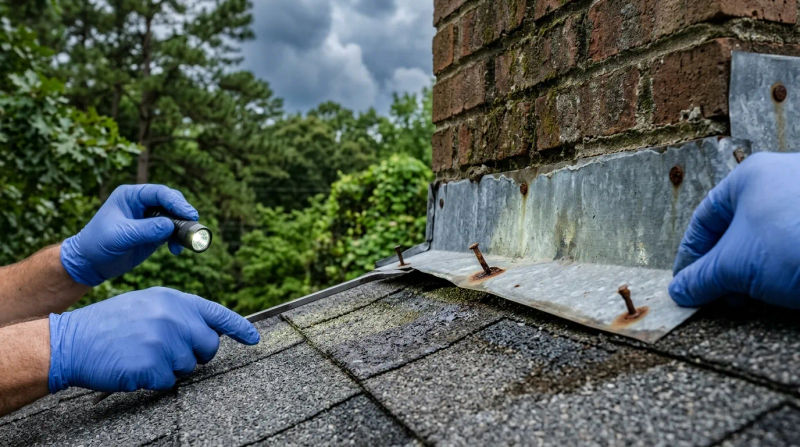
- Visible Lifting or Gaps: This is the most obvious sign. Look at the seams where your roof meets a wall, a dormer, or your chimney. Do you see metal that appears bent, lifted, or pulled away from the surface? Even a small gap is wide enough for wind-driven rain to penetrate.
- Water Stains on Interior Ceilings or Walls: A discolored spot on your ceiling is a late-stage symptom that a problem has existed for a while. If you see staining near your fireplace, it’s a classic example of chimney flashing leak symptoms. Water that gets past the chimney flashing can run down the masonry and soak into the drywall, often appearing far from the actual entry point.
- Rust and Corrosion: While some surface discoloration can be normal, significant rust streaks running down your shingles or siding from the flashing are a red flag. Rust indicates that the flashing's protective coating has worn away and the metal itself is breaking down, making it brittle and prone to cracking.
- Cracked or Missing Sealant: The black, tar-like sealant or caulk used to seal the edges of flashing doesn't last forever. The intense Alabama sun bakes it, causing it to become brittle, shrink, and crack. When this sealant fails, it creates a subtle but effective channel for water.
- Loose or Popped Fasteners: The nails or screws holding your flashing in place can work themselves loose over time due to the daily cycle of thermal expansion and contraction. A popped nail head creates a small hole that acts like a tiny funnel, directing water right under the flashing and into your roof deck.
What Causes This Problem
Understanding the causes of roof flashing damage can help you appreciate why regular inspections are so important. It’s rarely a single event but a combination of factors working together over time.
The primary culprit in the Northport area is our climate. The intense summer heat and high UV exposure accelerate the breakdown of sealants and protective coatings. Then, sudden, heavy thunderstorms with high winds physically batter the roof. This wind can get underneath a slightly loose piece of flashing and pry it up further, turning a minor issue into a major leak in a matter of minutes.
Age is another significant factor. Nothing lasts forever, and that includes your roof's flashing. Depending on the material and initial quality of installation, you can expect flashing to have a finite lifespan. As it ages, it becomes more susceptible to damage from weather and debris.
Finally, the initial installation quality plays a huge role, especially in homes with complex architecture. Many homes in our area built in the 1990s and 2000s feature what's known as Neo-eclectic design. These are often large properties with intricate rooflines - multiple gables, hips, valleys, and dormers. While aesthetically pleasing, each transition point requires a piece of flashing. A complex roof might have hundreds of feet of it. If even one section was installed without the precision and expertise required, it creates a built-in point of failure that may only become apparent years later.
When to Call a Professional
While identifying potential issues from the ground is a great first step, we always advise against homeowners getting on their roofs to perform DIY repairs. Working at height is dangerous, and walking on a roof can cause additional damage to shingles if not done correctly. Furthermore, a quick fix with a tube of caulk often masks the underlying problem or, worse, traps moisture and accelerates rot.
This is the point where you should contact an experienced professional. When our technicians perform an inspection, they follow a standardized process. They don't just look at the visible flashing; they assess the entire roofing system around it. They'll check:
- The condition of the shingles or roofing material above and below the flashing.
- The integrity of the fasteners and sealants.
- For signs of hidden water intrusion on the roof deck from the attic side, if accessible.
- The counter-flashing, step-flashing, and base flashing to ensure the entire system is working in concert.
Ignoring a small gap or a bit of rust might seem harmless, but it's a gamble, especially with hurricane season on the horizon. We've seen situations where a leak that would have been a simple flashing repair turns into a major project involving replacing drywall, insulation, and sections of the roof deck because it was left unaddressed through a few heavy storms.
Conclusion
Your roof’s flashing is its first line of defense at its most vulnerable points. It works tirelessly in the background to protect your home from water intrusion. By learning to spot the early loose roof flashing signs - like visible gaps, corrosion, and failing sealant - you can take a proactive approach to roof maintenance.
Don’t wait for a water stain to appear on your ceiling. The time to address potential roof flashing damage is now, before the next wave of Northport summer storm roof leaks puts your home to the test. A thorough inspection can provide peace of mind and help you catch small problems before they become costly emergencies.
If you notice any of these signs, contact a local roofing professional for an inspection. An expert eye can properly diagnose the issue and recommend the right solution to keep your home safe and dry.